

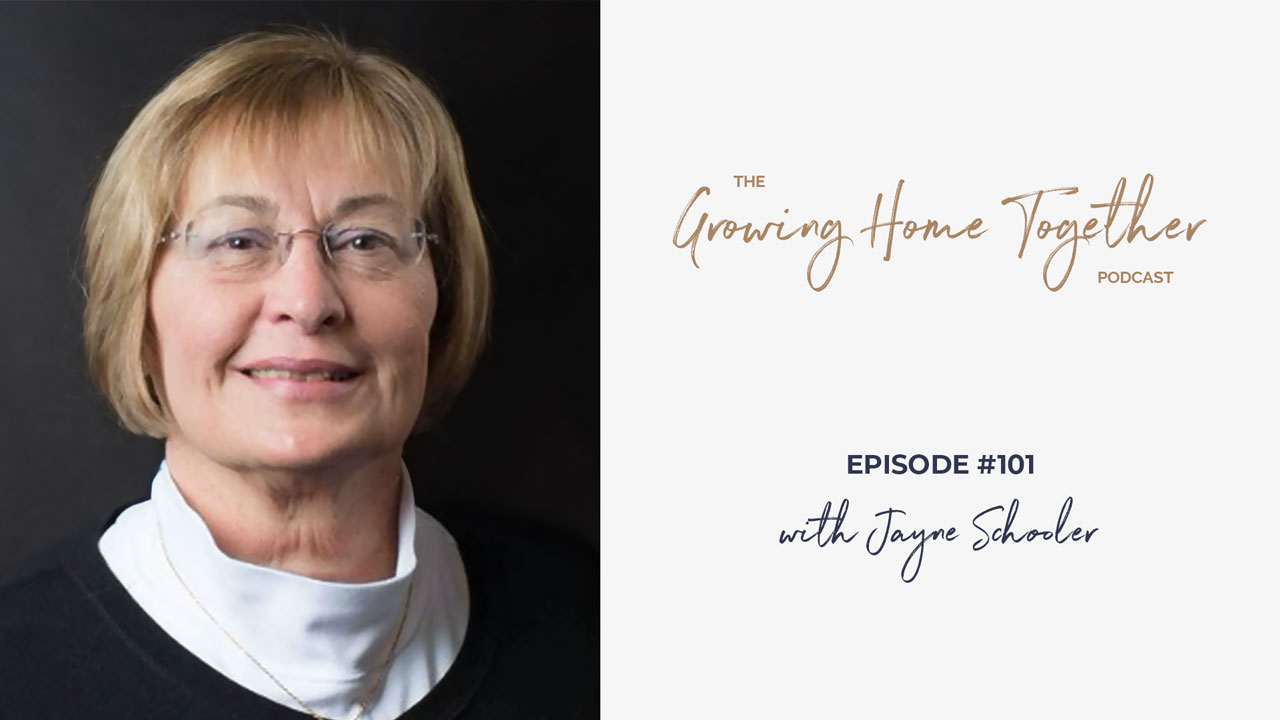
Episode 101: How to Care for a Child with a Painful Past—with Jayne Schooler
A number of years ago during one of our Michigan winters, our kids had a snow day off of school. What should have been a fun memory for our daughter became really scary since she suffered a sledding accident that put her in the hospital. She went through surgery and weeks at home in a wheelchair. To make matters worse, when she finally returned to school she was pushed out of her friend group by a bully who made the rest of her school year lonely and miserable.
For a time, these things affected her deeply until she healed and regained her strength. Yet for many children, traumatic events go beyond a single, difficult crisis. When kids experience ongoing abuse, neglect, and risk of harm, the effects can last for life. It’s no secret that traumatic events can have a profound impact on our kids’ lives. We all want to serve and love our kids well when they experience pain, and the awareness and understanding of the impact of trauma can make a world of difference.
That’s why we are so glad to welcome our guest, Jayne Schooler. Jayne is the author and co-author of many books including Caring for Kids from Hard Places. She’s an expert in Child Welfare, she’s an adoptive parent, and she has brought trauma-informed training worldwide to help adults care for kids in pain.
In this episode, Jayne shares :
- What trauma is and the different types
- Some of the behaviors children may display after a trauma
- How we can best support our children through the pain
- And much more!
This conversation has been so helpful in understanding how trauma can affect our children!
Links:

- [BOOK] Caring for Kids from Hard Places: How to Help Children and Teens with a Traumatic Past
- [BOOK] The Body Keeps the Score: Brain, Mind, and Body in the Healing of Trauma
- [BOOK] Childhood Disrupted: How Your Biography Becomes Your Biology, and How You Can Heal
- [BOOK] Sacred Rest: Recover Your Life, Renew Your Energy, Restore Your Sanity
- The Schooler Institute Event: “The Most Practical Parenting Conference You Have Ever Attended!”
- Connect with Jayne on her website or Facebook
Our Takeaways:
1) Trauma is the perception that my life isn’t safe. The important part of this definition is the “perception” of being in danger. That means that from the eyes of our children, any number of events and circumstances could invoke fear and even lead to an ongoing issue of trauma.
2) Behavior is vocabulary expressing a need. Think back to when you first brought your child home as an infant. They didn’t know how to ask for something or tell you where it hurt. All they can do is cry. The same is true of children who have experienced trauma, their behavior isn’t bad or willful; it is expressing a need. This is why it is so important to know the difference between a tantrum and a meltdown due to trauma.
3) Understand how to respond to the heart of the issue. As parents, aunts, uncles, school teachers, and neighbors, we are far more likely to encounter a child or even an adult who has experienced a painful past. It’s important that we understand how to respond to the heart of the issue appropriately. This might mean taking time to connect with a child when they are feeling afraid, informing them about transitions to a new activity before it happens, and more.
Meet Our Guest
Jayne Schooler is an author, foster, adoptive, and biological parent. She’s an expert in Child Welfare and has brought trauma-informed training worldwide to help adults care for kids in pain. Along with her late husband, David, they partnered as renowned speakers and trainers in adoption, foster care, and pastoral care. Jayne serves as the Foster & Adoptive Care Director for the Schooler Institute.


